
LTA Personal Mobility Aid (PMA) Regulations 2026

In Singapore, Personal Mobility Aids (PMAs) include manual wheelchairs, motorised wheelchairs, and mobility scooters. These devices are intended to support individuals who are unable to walk or have difficulty walking.


While motorised wheelchairs and mobility scooters are both PMAs, they are regulated differently. The latest LTA regulatory changes focus primarily on mobility scooters, with motorised wheelchairs exempted from several key requirements.
What qualifies as a mobility scooter
Under LTA regulations, a device is considered a mobility scooter only if it meets all of the following conditions:
- It has three or more wheels and a single footboard supported by the wheels
- It is steered using handlebars, including a delta tiller
- It has only one seat positioned behind the footboard (devices with multiple seats are not mobility scooters)
- It is designed to carry one individual who is unable to walk or has difficulty walking
- It is powered by a motor that forms part of the vehicle
Devices that resemble mobility scooters but do not meet these criteria may be regulated differently. Users are encouraged to understand the differences between mobility scooters and lookalike devices and ensure that only compliant active mobility devices are purchased.
Know the differences between mobility scooters and their lookalikes (PDF, 366kB) and ensure you only purchase compliant active mobility devices.
Regulations effective from 1 June 2026

Speed limits on public paths
All motorised PMAs must not travel faster than 6 km/h on public paths. Existing motorised PMAs with a maximum device speed of up to 10 km/h may continue to be used until end-2028, but must still keep within the 6 km/h speed limit on paths.
Size and weight limits
All PMAs used on public paths must comply with the following dimension limits, which are the same limits that currently apply on public transport:
- Maximum width: 70 cm
- Maximum length: 120 cm
- Maximum height: 150 cm (measured from the ground to the higher of the PMA or the user’s head)
- Maximum laden weight: 300 kg (including the user)
Users who require a PMA that exceeds these limits must have their need certified by a healthcare professional through the Assessment for Mobility Scooter (AMS).
Medical certification requirement
Users of mobility scooters and equivalent devices must obtain a Certificate of Medical Need via the AMS in order to use their devices on public paths. Mobility scooter equivalents include manual wheelchairs fitted with detachable motorised attachments that are steered by handlebars.
Motorised wheelchair users are exempt from this requirement.

Retail sale restrictions
Retailers may only display, advertise, or sell registered mobility scooters and equivalent devices that:
- Have a maximum device speed not exceeding 6 km/h
- Comply with the new dimension limits
Regulations effective from 1 January 2029
Mobility scooter registration
All mobility scooters used on public paths must be registered from 1 January 2029. Registration of existing mobility scooters will begin in mid-2027. Further details will be released closer to the rollout.
Motorised wheelchairs are exempt from registration.
Maximum device speed for all PMAs
From this date, the maximum device speed of all PMAs must not exceed 6 km/h. Users may wish to consult their device retailer to check whether a safe speed adjustment can be made to comply with the new limit.
Certificate of Medical Need and exemptions
From 1 June 2026, users of mobility scooters and equivalent devices must obtain a Certificate of Medical Need through the Assessment for Mobility Scooter (AMS) in order to use their devices on public paths.
This requirement applies to:
- Mobility scooters
- Mobility scooter equivalents, such as manual wheelchairs fitted with detachable motorised attachments steered by handlebars
Who is exempt from medical certification
The following groups are exempt and do not need to obtain a Certificate of Medical Need:
- Seniors aged 70 and above* (see note below)
- Users who received subsidised mobility scooters under the Seniors’ Mobility and Enabling Fund (SMF) before 27 February 2026
- All existing and future beneficiaries of subsidised mobility scooters under the Assistive Technology Fund (ATF)
- Past and future applicants of Ministry of Health (MOH) disability schemes who were assessed as having Activities of Daily Living (ADL) needs in Mobility or Transferring, based on either a Functional Assessment Report (FAR) or Severe Disability Assessment (SDA)
These disability schemes include:
- Pioneer Generation Disability Assistance Scheme
- Home Caregiving Grant
- Migrant Domestic Worker Levy Concession for Persons with Disabilities
- CareShield Life
- ElderFund
- ElderShield
- Interim Disability Assistance Programme for the Elderly (IDAPE)
- MediSave Care
* Age will be determined based on the year of birth rather than the exact date of birth. For example, if you were born in 1956, you will be considered 70 years old in 2026, regardless of your birth month or day, and will therefore be exempt from the medical certification requirement.
Checking certification or exemption status
Mobility scooter users who have completed their medical assessment can check their Certificate of Medical Need or exemption status on OneMotoring.
Please note that it may take up to one week after submission for the certification or exemption status to be reflected.
How to obtain the Certificate of Medical Need
From 27 February 2026, mobility scooter users can undergo the Assessment for Mobility Scooter (AMS) to obtain a Certificate of Medical Need.
Who can conduct the AMS
The AMS must be carried out by either:
- a Singapore-registered doctor, or
- a Singapore-registered Occupational Therapist (OT)
You may visit your usual doctor or OT. If you do not have one, you may go to a General Practitioner (GP) clinic that offers the AMS. LTA provides a list of participating GP clinics and indicative charges. It is recommended to call ahead to confirm that the clinic provides the AMS and to check the latest fees.
List of participating GP Clinics offering AMS
In some cases, you may be asked to complete a follow-up OT competency assessment to assess whether you can safely operate a mobility scooter. LTA also provides a list of OTs that offer this competency assessment. It is recommended to call ahead to confirm availability and to check the latest fees.
What to do before going to the clinic
- Check with the clinic whether they can complete the AMS using the digital form and submit it to LTA on your behalf
- If they cannot submit digitally, print the hardcopy assessment form and bring it with you to the clinic
How much the AMS costs
AMS fees vary depending on the clinic and the complexity of the consultation. Contact the clinic in advance to ask about the likely cost.
If a follow-up OT competency assessment is required, that may involve additional fees depending on the provider.
What to do after seeing the healthcare professional
You must ensure your Certificate of Medical Need is submitted to LTA. This can be done in either of these ways:
(A) Digital assessment form
If the healthcare professional completes and submits the digital form:
- LTA receives it directly
- You do not need to submit anything else
- If you want a digital copy, you can provide your email address to the healthcare professional
(For healthcare professionals: the LTA submission link or QR code is referenced in MOH’s Circular No. 73/2025, Annex A.)
(B) Hardcopy assessment form
If the healthcare professional completes and signs the hardcopy form, you must submit it yourself:
- Scan the form or take a clear photo of the completed signed form
- Submit it via FormSG (LTA’s FormSG submission link/QR code)
- Fill in the requested details and upload the image of the assessment form
- After submission, you will receive an email acknowledgement
FormSG for submission of assessment form to LTA

Checking status and when you can start using your mobility scooter
You can check your certification status on OneMotoring by entering your NRIC and Date of Birth. It may take up to one week for your status to be updated.
Once you have been certified by the healthcare professional under AMS, you may use your mobility scooter immediately, even if the online status has not updated yet.
Registration of mobility scooters
All mobility scooters and equivalent devices used on public paths must be registered by 1 January 2029. This includes manual wheelchairs fitted with motorised attachments.
Registration will be introduced in two phases.
Phase 1 (from 1 June 2026): New sales
From 1 June 2026, any mobility scooter sold by a retailer must be registered before it is sold.
How it works:
- Retailers will arrange for the mobility scooter to be registered and tagged by LTA-appointed vendors before the sale
- As part of registration, the appointed vendor will confirm the device meets the required criteria, including compliance with the size limits and a maximum device speed of 6 km/h
- The vendor will also affix a Registration Mark and an Identification Mark
Before completing the sale:
- Retailers must verify on OneMotoring that the buyer has a Certificate of Medical Need or is exempt
- The sale is only completed after the registered mobility scooter has been successfully transferred in ownership from the retailer to the buyer
Phase 2 (from mid-2027): Existing devices
To make it easier for existing users to register their mobility scooters, from mid-2027, LTA will deploy roving registration stations at community touchpoints.
At these stations:
- LTA or its appointed vendors will conduct compliance checks on both the device and the user before registration is completed
Registration and Identification Mark

Mobility scooters must be affixed with both a Registration Mark (RM) and an Identification Mark (IM).
If the IM (commonly referred to as the "licence plate") needs to be replaced, you may approach a signcraft shop to fabricate a replacement. However, if the RM needs to be replaced, it can only be replaced by the Land Transport Authority (LTA).
The Mobility Scooter Buying Process
The buying process for mobility scooters in Singapore has changed. Sellers are now legally required to collect specific personal details, including NRIC/FIN numbers. We understand that sharing sensitive information can be concerning, but mobility scooters cannot be bought or sold without these verification details.
This guide outlines the mandatory steps and the minimum information required to complete your purchase. If you wish to independently verify these regulations, you are welcome to contact the Land Transport Authority (LTA).
Step 1: Pre-Sales Checks
Effective 1 June 2026, both buyers and sellers must ensure the buyer holds a valid Certificate of Medical Need or qualifies for an exemption.
- Buyers aged 70 and above: You are automatically exempted. You can proceed directly to Step 2 without further verification.
-
Buyers aged below 70: Sellers must verify your medical certification. To do this, you will need to provide:
- NRIC / FIN Number
- Date of Birth
🔗 Verification Link: You can check the medical certificate status and learn more about why this information is required on the LTA OneMotoring Portal.
Once the seller successfully verifies your eligibility, the process moves to Step 2.
Step 2: Ownership Transfer
A sale is only legally complete once the ownership of the mobility scooter is officially transferred from the seller to the buyer. This process depends on whether the buyer has a Singpass account.
Option A: Buyers with Singpass
If you have a Singpass account, please provide the seller with:
- NRIC / FIN Number
- Full Name (as stated on NRIC/FIN)
- Date of Birth
- Mobile Number
The seller will use this information to initiate the ownership transfer on the OneMotoring website. The screenshot below shows the fields required to start the ownership transfer process.

What happens next:
- You will receive an SMS notification from LTA.
- Log in to OneMotoring using Singpass to accept the transfer within 5 working days.
- The system will automatically verify your eligibility and approve the transfer instantly upon your acceptance.
Option B: Buyers without Singpass
If you do not have a Singpass account, please provide the seller with:
- NRIC / FIN Number
- Full Name (as stated on NRIC/FIN)
- Date of Birth
- Mobile Number
- Home Address
The seller will manually submit these details via an official FormSG to LTA to initiate the transfer.
⚠️ IMPORTANT NOTE FOR NON-SINGPASS USERS
As part of the official FormSG process mandated by LTA, sellers are required to upload a photo of the buyer’s NRIC/FIN.
- If a Next of Kin (NOK) is purchasing the scooter on behalf of the actual owner, a photo of both the owner's and the NOK's NRIC/FIN will be required.
We completely understand that sharing identity card photos is highly sensitive. However, this is a strict LTA compliance requirement, and there are no alternative workarounds for buyers without Singpass. We appreciate your kind understanding and cooperation.
🔗 Verification Link: You can preview the official required fields on the LTA FormSG Page.
```
Mobility scooters are regulated as medical devices (HSA requirements)
Mobility scooters are treated as medical devices under Singapore’s Health Products Act, because they are intended to assist individuals with walking difficulties.
Source: Joint Industry Circular by LTA and HSA
What this means for importers, manufacturers, and wholesalers
If your business imports, manufactures, or wholesales mobility scooters, you must hold the relevant HSA medical device dealer licence (importer, manufacturer, and or wholesaler, depending on what you do).
In addition, the importer or manufacturer must ensure the mobility scooter model is listed in HSA’s Class A Medical Device Database.
Mobility scooters are classified as Class A medical devices. While Class A devices do not require product registration, dealers are still required to be licensed, and importers or local manufacturers must submit a declaration of their Class A device list under their licences before import and supply.
What this means for retailers
If you only do retail sales of mobility scooters, you do not need an HSA dealer licence. However, you should ensure you source mobility scooters from HSA-licensed dealers and that the model is listed in the Class A Medical Device Database.
Important compliance warning
It is an offence to import or supply a mobility scooter that is not listed in HSA’s Class A database, even if it is sold online.
If unregistered mobility scooters are found available for sale at retailer premises from 1 June 2026, they may be impounded by LTA.
ELFIGO Mobility compliance with HSA requirements
ELFIGO Mobility holds the necessary HSA Importer and Wholesaler licences for medical devices in Singapore. All our mobility scooters and other applicable PMAs are properly listed with HSA in accordance with regulatory requirements.
Customers who wish to independently verify our compliance may do so using the official HSA public databases:
Check ELFIGO Mobility's HSA Importer and Wholesaler licences

View the list of HSA-listed Class A medical devices supplied by ELFIGO Mobility
The easiest and quickest way to use the Class A medical device list is to search by our HSA Importer's License number: ES0001429

Since HSA listing is a prerequisite for LTA to whitelist a mobility scooter for registration, checking the HSA database before purchasing your PMA helps ensure that your device will comply with the new regulations from 1 June 2026.
Still Confused?
Just tap on the chat icon on the bottom right, and our AI chatbot will be able to help answer most of your questions!
Information Sources
Frequently Asked Questions
1. Can existing PMA with speeds higher than 6 km/h still be used in 2026?
Yes, they can still be used until 31 December 2028, so long as the maximum speed is less than 10 km/h. However, users will need to self-regulate and drive at a slower speed of 6 km/h.
Users can use the speed of other pedestrians as a guide. So long as their PMA is going at approximately the same speed as a brisk walk, they are likely within the speed limit.
By 1 January 2029, all existing PMAs must have their maximum speed reduced to 6 km/h. Mobility scooters will also need to be inspected, tagged and registered by LTA-appointed vendors at roving inspection centres.
2. If I want to program my existing PMA to lower the speed to 6 km/h, can it be done?
If the PMA was purchased from ELFIGO (formerly Falcon), yes, it can be done for a fee. The rate for programming is $90 for walk-in and $150 for on-site.
3. How do I obtain approval to drive a PMA?
If you belong to one of these groups, approval is not needed:
a) You drive a motorised wheelchair, not a mobility scooter.
b) Your mobility scooter was obtained with a government subsidy before Q4 2025.
c) You are 70 years old or above.
d) You are a past or future applicant of the Ministry of Health (MOH) disability schemes.
If your mobility scooter was not subsidised by the government you will need to undergo an Assessment for Mobility Scooter (AMS) to obtain a certification of medical need from 2026 onwards.
This can be done through your regular doctor, occupational therapist (OT) or any General Practitioner (GP) that offers this service.
4. Are ELFIGO PMA compliant with 2026 Rules?
All ELFIGO PMAs currently being sold comply with the 2026 size and laden weight restrictions. They also meet the 2026 speed limit of 6 km/h.
5. Do your mobility scooters have UL2272 certification?
No, because UL2272 is only needed for personal mobility devices such as e-scooters, hoverboards and unicycles, which we do not sell. They are not required for the personal mobility aids (PMAs) such as mobility scooters and motorised wheelchairs, which we do sell. All our PMAs are compliant with the new regulations in 2026.
6. If I buy a mobility scooter from ELFIGO today, will you help me register and tag the device by 1 June 2026, when the new regulations take effect?
7. Is it better to buy a mobility scooter before or after 1 June 2026?
Types of Personal Mobility Aids (PMAs)
-

Motorised Wheelchairs | Electric Wheelchairs
Motorised wheelchairs — also known as power wheelchairs or electric wheelchairs —...
-

Mobility Scooters | Personal Mobility Aids (PMA)
Mobility Scooter — also known as motorised scooter, electric scooter, or even...
-
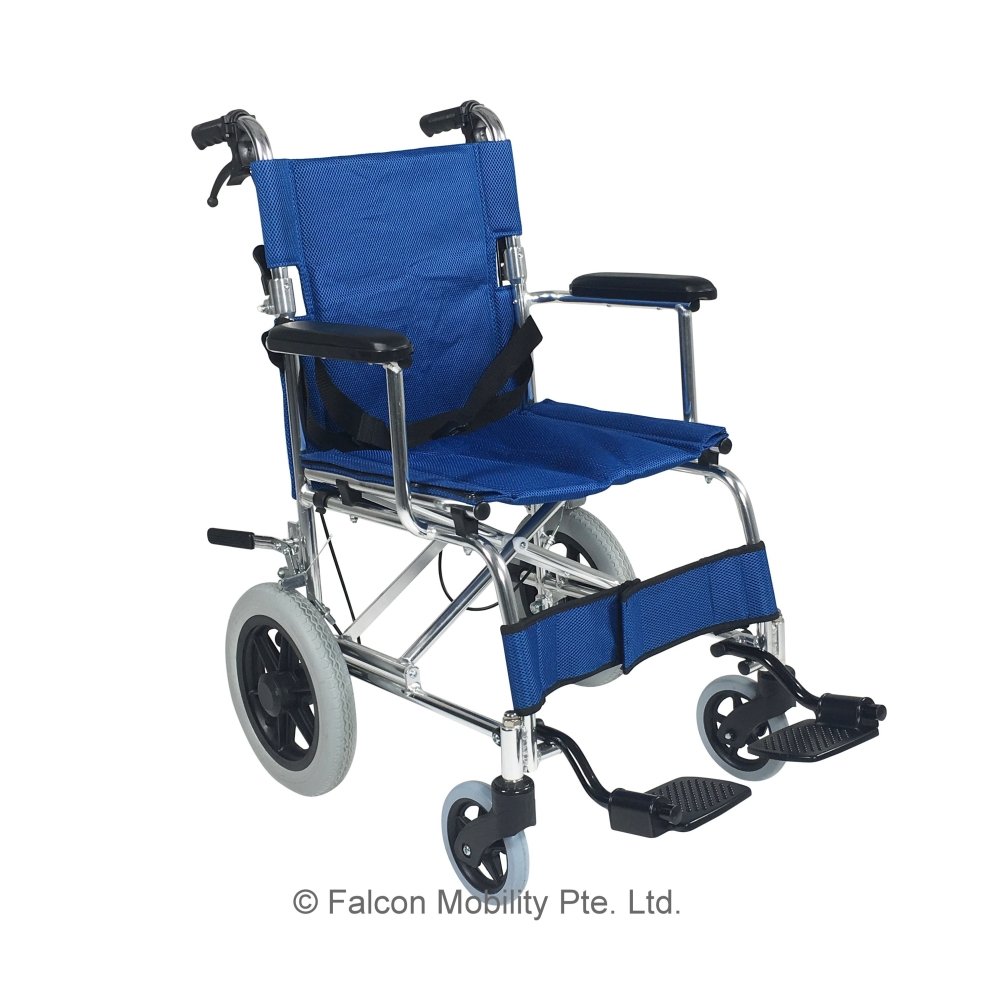
Manual Wheelchairs (Non-Motorised)
Wheelchairs and Pushchairs We specialize in ultra-light wheelchairs and pushchairs that can be easily...


When to Choose a Lithium PMA
When to Choose an SLA PMA
Collections
-

Lithium Battery-Powered PMAs (Personal Mobility Aids)
Lithium battery-powered PMAs (personal mobility aids) such as electric wheelchairs and mobility...
-

SLA Battery-Powered PMAs (Personal Mobility Aids)
SLA battery-powered PMAs (personal mobility aids) such as motorised wheelchairs and mobility...

